
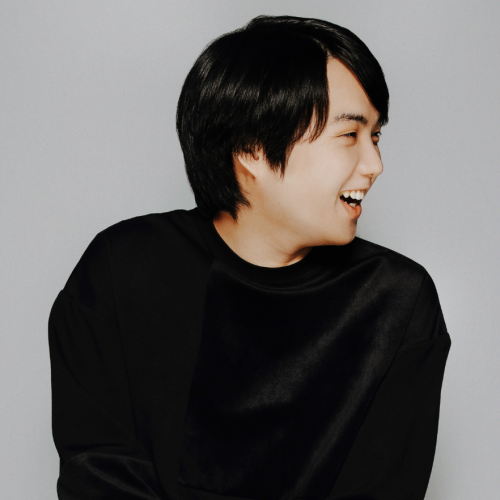
Mao Fujita, piano
Debut Series
There are a limited number of obstructed view seats available via phone sales. The box office is open 10AM-4PM Mon-Fri at 617-482-6661 if you are interested in purchasing these seats.
Japanese pianist Mao Fujita made his United States solo recital debut in 2023 on one of this country’s most storied stages for classical music, Carnegie Hall’s Stern Auditorium. Now, on our Debut Series, you can experience his artistry up close in the intimate setting of Longy’s Pickman Hall. A young artist on a trajectory to the top of the classical music world, Fujita has earned acclaim and captivated audiences with his eloquence, poetic touch, and the fluidity and momentum of a stream or a gust of wind.
Fujita’s program leans toward the Romantic, with sonatas from Beethoven and Brahms, variations by Mendelssohn and Berg, and two selections by Wagner, concluding with Isoldes Liebestod. It’s a spectacular introduction to Boston audiences from a limitless young artist.
“When his fingers touched the keys, ... waves of airy filigree, beautifully formed and finished, emerged in almost uninterrupted streams for his two-hour solo recital.”
The New York Times
Program Details
Shortly before his twenty-second birthday, Beethoven left Bonn to seek his fortune in Vienna. Before his departure, he was given a friendship book containing messages from supporters. One of these, Beethoven’s early patron Count von Waldstein (later the dedicatee of his Waldstein sonata), left an auspicious note:
The Genius of Mozart is still mourning and weeping over the death of her pupil. She found a refuge but no occupation with the inexhaustible Haydn; through him she wishes once more to form a union with another. With the help of assiduous labor, you shall receive Mozart’s spirit from Haydn’s hands.
Beethoven studied with Haydn for about a year. Headstrong and at times overly sensitive to criticism, Beethoven wasn’t always a grateful pupil. He dedicated the three Opus 2 sonatas to Haydn, but privately declared that he had never learned anything useful from the old master. Despite his youthful ego, he later came to regard his teacher with reverence and affection.
Though Beethoven was still years from verbalizing his desire to walk a “new path,” already his early sonatas pushed against tradition. Whereas Haydn and Mozart almost exclusively used a three-movement layout for their sonatas, Beethoven added a fourth movement to his early sonatas. The addition of the fourth movement, one usually reserved for more distinguished genres like the symphony, broadcast not only an elevation of the sonata as a genre but of Beethoven as a serious talent.
Beethoven launches into this sonata with a rapid ascending figure known as a Mannheim Rocket; he contrasts this upward staccato melody with a descending, legato second theme. The turbulent music shows the influence of the proto-Romantic Sturm und Drang movement, whose works are characterized by dark, minor keys; drastic changes of dynamics and tempo; syncopation; and harmonic dissonance. Following a loud return of the opening material, the movement concludes after a delayed, almost frustrated resolution.
The slow second movement opens with a tender, ornamented theme above an undulating accompaniment. Light, florid passagework in the right hand dominates the second theme. Each theme is repeated with embellishments before the movement ends in a tranquil coda.
Sudden dynamic contrasts, syncopation, and dramatic pauses characterize the melancholic third-movement minuet. A contrasting trio section contains a flowing melody passed between both hands. The stormy finale presents similar contrasts as driving chords hammer over running triplets. Following a lyrical major-key middle section, the opening material returns for a tempestuous conclusion.
©Andrew McIntyre, 2026
Shortly before his twenty-second birthday, Beethoven left Bonn to seek his fortune in Vienna. Before his departure, he was given a friendship book containing messages from supporters. One of these, Beethoven’s early patron Count von Waldstein (later the dedicatee of his Waldstein sonata), left an auspicious note:
The Genius of Mozart is still mourning and weeping over the death of her pupil. She found a refuge but no occupation with the inexhaustible Haydn; through him she wishes once more to form a union with another. With the help of assiduous labor, you shall receive Mozart’s spirit from Haydn’s hands.
Beethoven studied with Haydn for about a year. Headstrong and at times overly sensitive to criticism, Beethoven wasn’t always a grateful pupil. He dedicated the three Opus 2 sonatas to Haydn, but privately declared that he had never learned anything useful from the old master. Despite his youthful ego, he later came to regard his teacher with reverence and affection.
Though Beethoven was still years from verbalizing his desire to walk a “new path,” already his early sonatas pushed against tradition. Whereas Haydn and Mozart almost exclusively used a three-movement layout for their sonatas, Beethoven added a fourth movement to his early sonatas. The addition of the fourth movement, one usually reserved for more distinguished genres like the symphony, broadcast not only an elevation of the sonata as a genre but of Beethoven as a serious talent.
Beethoven launches into this sonata with a rapid ascending figure known as a Mannheim Rocket; he contrasts this upward staccato melody with a descending, legato second theme. The turbulent music shows the influence of the proto-Romantic Sturm und Drang movement, whose works are characterized by dark, minor keys; drastic changes of dynamics and tempo; syncopation; and harmonic dissonance. Following a loud return of the opening material, the movement concludes after a delayed, almost frustrated resolution.
The slow second movement opens with a tender, ornamented theme above an undulating accompaniment. Light, florid passagework in the right hand dominates the second theme. Each theme is repeated with embellishments before the movement ends in a tranquil coda.
Sudden dynamic contrasts, syncopation, and dramatic pauses characterize the melancholic third-movement minuet. A contrasting trio section contains a flowing melody passed between both hands. The stormy finale presents similar contrasts as driving chords hammer over running triplets. Following a lyrical major-key middle section, the opening material returns for a tempestuous conclusion.
©Andrew McIntyre, 2026
Though known primarily for his revolutionary operas, Richard Wagner composed roughly two hours of music for solo piano. Piano was Wagner’s first instrument, and contemporary accounts paint him as a fiery player. The Symbolist poet Auguste Villiers de l’Isle-Adam called his playing “superhuman,” writing, “at the end of the two hours we are really ill. It’s no longer a piano, or a voice, but a vision….”
The Albumblatt (“album-leaf”) emerged in the Romantic era as a small piece originally written in the album of a friend or patron. Beethoven’s Für Elise remains the most famous work in the genre. The Albumblatt remained fashionable throughout the nineteenth century: Wagner composed a handful, Franz Liszt wrote nearly three dozen. Wagner composed this piece for Princess Pauline von Metternich, an Austrian socialite. Through her intervention, his opera Tannhäuser premiered at the Paris Opéra that year (the performances were an unmitigated disaster, in part because audiences protested Wagner’s refusal to include the customary second-act ballet).
The Metternich Albumblatt, composed between the completion and premiere of Tristan und Isolde, contains little of the difficulty and dissonance of that work. However, there are some similarities. In both works, Wagner uses sequences of ascending melody to build tension, though the effect is much subtler here than in the frenzied ecstasy of Isolde’s Love-death (“Isoldes Liebestod” in German). Here too Wagner avoids returns to the tonic chord; when the music finally resolves, it remains there for the entirety of the diaphanous coda.
©Andrew McIntyre, 2026
Though known primarily for his revolutionary operas, Richard Wagner composed roughly two hours of music for solo piano. Piano was Wagner’s first instrument, and contemporary accounts paint him as a fiery player. The Symbolist poet Auguste Villiers de l’Isle-Adam called his playing “superhuman,” writing, “at the end of the two hours we are really ill. It’s no longer a piano, or a voice, but a vision….”
The Albumblatt (“album-leaf”) emerged in the Romantic era as a small piece originally written in the album of a friend or patron. Beethoven’s Für Elise remains the most famous work in the genre. The Albumblatt remained fashionable throughout the nineteenth century: Wagner composed a handful, Franz Liszt wrote nearly three dozen. Wagner composed this piece for Princess Pauline von Metternich, an Austrian socialite. Through her intervention, his opera Tannhäuser premiered at the Paris Opéra that year (the performances were an unmitigated disaster, in part because audiences protested Wagner’s refusal to include the customary second-act ballet).
The Metternich Albumblatt, composed between the completion and premiere of Tristan und Isolde, contains little of the difficulty and dissonance of that work. However, there are some similarities. In both works, Wagner uses sequences of ascending melody to build tension, though the effect is much subtler here than in the frenzied ecstasy of Isolde’s Love-death (“Isoldes Liebestod” in German). Here too Wagner avoids returns to the tonic chord; when the music finally resolves, it remains there for the entirety of the diaphanous coda.
©Andrew McIntyre, 2026
The death of Alban Berg’s father threw the family into dire straits. Despite a lack of formal training, the fifteen-year-old Berg turned to composing to escape the drudgery of home life. A few years later, his siblings responded to a newspaper advertisement from a teacher named Arnold Schoenberg. Due to the Berg family’s poor finances, Schoenberg taught the boy for free for the first year. Berg studied under Schoenberg for more than six years, becoming one of his most devoted disciples and a core member, along with Anton Webern, of what came to be called the Second Viennese School. Schoenberg and his students pushed beyond the bounds of tonal music, writing dissonant and thorny atonal works and devising a new method of twelve-tone composition.
Schoenberg reflected on his pupil, “Berg is an extraordinarily gifted composer, but the state he was in when he came to me… he was absolutely incapable of writing an instrumental movement or inventing an instrumental theme.” To correct this deficiency, Schoenberg assigned Berg to write numerous short instrumental works. The Twelve Variations, composed in 1908, emerged from these lessons.
The opening theme is harmonically straightforward, revealing none of the harmonic innovations that would emerge from the Second Viennese School. The first few variations are sparsely textured exercises in counterpoint. The fifth is the only variation written in a minor key. An “infinite canon” in 9/8 time follows. The seventh variation, marked Kräftig (Vigorous), proceeds with upward flourishes that build to the lively eighth variation. Variations 9 and 10, by contrast, are slow and tranquil. The eleventh variation swells to a quasi-cadenza before moving directly into the twelfth. This final variation is the longest and most elaborate of the set, with dense chords and pervasive chromaticism. Following a passage of Lisztian flourishes and parallel octaves, the piece concludes with a subdued final cadence.
©Andrew McIntyre, 2026
The death of Alban Berg’s father threw the family into dire straits. Despite a lack of formal training, the fifteen-year-old Berg turned to composing to escape the drudgery of home life. A few years later, his siblings responded to a newspaper advertisement from a teacher named Arnold Schoenberg. Due to the Berg family’s poor finances, Schoenberg taught the boy for free for the first year. Berg studied under Schoenberg for more than six years, becoming one of his most devoted disciples and a core member, along with Anton Webern, of what came to be called the Second Viennese School. Schoenberg and his students pushed beyond the bounds of tonal music, writing dissonant and thorny atonal works and devising a new method of twelve-tone composition.
Schoenberg reflected on his pupil, “Berg is an extraordinarily gifted composer, but the state he was in when he came to me… he was absolutely incapable of writing an instrumental movement or inventing an instrumental theme.” To correct this deficiency, Schoenberg assigned Berg to write numerous short instrumental works. The Twelve Variations, composed in 1908, emerged from these lessons.
The opening theme is harmonically straightforward, revealing none of the harmonic innovations that would emerge from the Second Viennese School. The first few variations are sparsely textured exercises in counterpoint. The fifth is the only variation written in a minor key. An “infinite canon” in 9/8 time follows. The seventh variation, marked Kräftig (Vigorous), proceeds with upward flourishes that build to the lively eighth variation. Variations 9 and 10, by contrast, are slow and tranquil. The eleventh variation swells to a quasi-cadenza before moving directly into the twelfth. This final variation is the longest and most elaborate of the set, with dense chords and pervasive chromaticism. Following a passage of Lisztian flourishes and parallel octaves, the piece concludes with a subdued final cadence.
©Andrew McIntyre, 2026
Deeply influenced by Beethoven from a young age, Mendelssohn fought with his father over the latter’s disdain for “Beethoven and all visionaries.” Mendelssohn continued to turn to Beethoven throughout his life: to cite one example, in his final year he gave a memorized performance of Beethoven’s 32 Variations in C minor for the newly formed London Beethoven Quartet Society.
Yet when a publisher approached Mendelssohn to contribute to his “Album-Beethoven,” he initially declined. Though the project was for a noble cause, raising funds for the erection of a bronze statue of Beethoven in his hometown of Bonn, Mendelssohn agreed only when he learned that other prominent pianists including Chopin and Liszt would be contributing. What started as a “short song” bloomed into what Mendelssohn scholar R. Larry Todd proclaims “the summit of Mendelssohn’s piano music.”
Despite his initial reluctance, Mendelssohn gave the variations great thought. He increased their number, deleted some of the originals, re-ordered the remaining variations, and reworked those that made the cut. Plans to include direct allusions to Beethoven were scrapped in favor of an entirely new and cohesive work consisting of seventeen variations plus a coda. The variations are quite short; only the seventeenth and the coda take up more than a page. Following the plaintive theme in D minor, the first nine variations progress in crescendos of increasing dramatic tension. The tenth variation, a walking-pace fugue, provides a brief respite. Only the fourteenth variation, an anthemic Adagio, is in a major key. Each of the last three variations flows into the next before the coda’s dazzling conclusion.
©Andrew McIntyre, 2026
Deeply influenced by Beethoven from a young age, Mendelssohn fought with his father over the latter’s disdain for “Beethoven and all visionaries.” Mendelssohn continued to turn to Beethoven throughout his life: to cite one example, in his final year he gave a memorized performance of Beethoven’s 32 Variations in C minor for the newly formed London Beethoven Quartet Society.
Yet when a publisher approached Mendelssohn to contribute to his “Album-Beethoven,” he initially declined. Though the project was for a noble cause, raising funds for the erection of a bronze statue of Beethoven in his hometown of Bonn, Mendelssohn agreed only when he learned that other prominent pianists including Chopin and Liszt would be contributing. What started as a “short song” bloomed into what Mendelssohn scholar R. Larry Todd proclaims “the summit of Mendelssohn’s piano music.”
Despite his initial reluctance, Mendelssohn gave the variations great thought. He increased their number, deleted some of the originals, re-ordered the remaining variations, and reworked those that made the cut. Plans to include direct allusions to Beethoven were scrapped in favor of an entirely new and cohesive work consisting of seventeen variations plus a coda. The variations are quite short; only the seventeenth and the coda take up more than a page. Following the plaintive theme in D minor, the first nine variations progress in crescendos of increasing dramatic tension. The tenth variation, a walking-pace fugue, provides a brief respite. Only the fourteenth variation, an anthemic Adagio, is in a major key. Each of the last three variations flows into the next before the coda’s dazzling conclusion.
©Andrew McIntyre, 2026
On September 30, 1853, Robert and Clara Schumann received a young composer named Johannes Brahms into their home, where he performed a number of his compositions for them. Robert’s diary entry from the next day includes the note, “visit from Brahms—a genius.” He heralded Brahms as one “called to give expression to his times in ideal fashion: a musician who would reveal his mastery not in gradual stages but like Minerva would spring fully armed from Kronos’ head.”
The first piece Brahms played for them was his C-major piano sonata. In the year before meeting the Schumanns, he had composed a trio of piano sonatas before promptly abandoning the genre. Despite its opus number, it was the second extant sonata he composed. Brahms, who felt that the C-major sonata was of higher quality, decided to make it his inaugural publication. Brahms dedicated the work to violinist Joseph Joachim. Brahms first heard the virtuoso perform Beethoven’s violin concerto when both were in their teens. Joachim facilitated Brahms’ meeting with the Schumanns, and the pair grew to become lifelong friends and collaborators.
The opening subject evokes Beethoven’s Hammerklavier sonata. Brahms, who kept a bust of Beethoven above his piano, acutely felt the anxiety of influence of his predecessor. Yearning and virtuosic, this movement captures the sense of striving that characterized Beethoven’s “heroic” middle period. The recapitulation is unusually restless and unresolved; only in the closing bars of the movement does the music return resolutely to its home key.
The second movement is a theme and variations based on the song “Verstohlen geht der Mond auf” (“The moon rises stealthily”). Following two minor-key variations, the third appears in a tender major key. The movement concludes with a tranquil duet for soprano and tenor—suggesting the song text’s “two faithful hearts”—before moving directly into the third movement, a scherzo and trio. The trio’s phrases build in intensity as they ascend to a climax. A swift descending scale signals a reprise of the frenetic scherzo.
Writing about her first meeting with Brahms, Clara noted “his fine hands which easily overcome the greatest difficulties (his things are very difficult).” This could easily have been a reference to the C-major sonata’s virtuosic finale. This intense, toccata-like rondo is arranged in a palindrome: ABACACABA. An up-tempo coda brings the sonata to an exuberant conclusion.
©Andrew McIntyre, 2026
On September 30, 1853, Robert and Clara Schumann received a young composer named Johannes Brahms into their home, where he performed a number of his compositions for them. Robert’s diary entry from the next day includes the note, “visit from Brahms—a genius.” He heralded Brahms as one “called to give expression to his times in ideal fashion: a musician who would reveal his mastery not in gradual stages but like Minerva would spring fully armed from Kronos’ head.”
The first piece Brahms played for them was his C-major piano sonata. In the year before meeting the Schumanns, he had composed a trio of piano sonatas before promptly abandoning the genre. Despite its opus number, it was the second extant sonata he composed. Brahms, who felt that the C-major sonata was of higher quality, decided to make it his inaugural publication. Brahms dedicated the work to violinist Joseph Joachim. Brahms first heard the virtuoso perform Beethoven’s violin concerto when both were in their teens. Joachim facilitated Brahms’ meeting with the Schumanns, and the pair grew to become lifelong friends and collaborators.
The opening subject evokes Beethoven’s Hammerklavier sonata. Brahms, who kept a bust of Beethoven above his piano, acutely felt the anxiety of influence of his predecessor. Yearning and virtuosic, this movement captures the sense of striving that characterized Beethoven’s “heroic” middle period. The recapitulation is unusually restless and unresolved; only in the closing bars of the movement does the music return resolutely to its home key.
The second movement is a theme and variations based on the song “Verstohlen geht der Mond auf” (“The moon rises stealthily”). Following two minor-key variations, the third appears in a tender major key. The movement concludes with a tranquil duet for soprano and tenor—suggesting the song text’s “two faithful hearts”—before moving directly into the third movement, a scherzo and trio. The trio’s phrases build in intensity as they ascend to a climax. A swift descending scale signals a reprise of the frenetic scherzo.
Writing about her first meeting with Brahms, Clara noted “his fine hands which easily overcome the greatest difficulties (his things are very difficult).” This could easily have been a reference to the C-major sonata’s virtuosic finale. This intense, toccata-like rondo is arranged in a palindrome: ABACACABA. An up-tempo coda brings the sonata to an exuberant conclusion.
©Andrew McIntyre, 2026
“I have better things to do with my time than transcribe, paraphrase, and illustrate, and from now on I will be more discriminating in this recreation,” Liszt once complained, yet he churned out hundreds of these lucrative transcriptions. Many were based on his own works, though he also transcribed the music of nearly one hundred other composers, including fifteen based on the operas of Richard Wagner. Liszt, who called himself one of Wagner’s “most zealous and devoted admirers,” provided him financial assistance and even helped him flee Germany after his involvement in the failed May Uprising.
In an 1854 letter to Liszt, Wagner wrote, “I have devised in my mind a Tristan und Isolde, the simplest, yet most full-blooded musical conception imaginable, and with the ‘black flag’ that waves at the end I shall cover myself over—to die.” Eleven years later, the opera premiered in Munich under the baton of Hans von Bülow. Earlier that spring, von Bülow’s wife (Liszt’s daughter, Cosima) had given birth to a daughter named Isolde; the child’s father was not von Bülow’s but Wagner’s. The affair scandalized Munich and strained Liszt’s and Wagner’s friendship. Nonetheless, Liszt soon published a transcription of the Act III finale of Tristan und Isolde.
Liszt’s arrangement opens with a motto from Tristan and Isolde’s love duet, which is sung to the words "sehnend verlangter Liebestod” (“A longingly desired love-death”). This opening gives the finale its famous sobriquet, Liebestod. Apart from the introduction, Liszt follows Wagner’s score almost exactly. He evokes shimmering strings with quiet tremolos that build to an ecstatic climax. Liszt’s arrangements often deviated significantly from their source material; his faithfulness to Wagner’s score was perhaps a sign of how much he venerated the music and, despite their falling out, the man.
©2025, Andrew McIntyre
“I have better things to do with my time than transcribe, paraphrase, and illustrate, and from now on I will be more discriminating in this recreation,” Liszt once complained, yet he churned out hundreds of these lucrative transcriptions. Many were based on his own works, though he also transcribed the music of nearly one hundred other composers, including fifteen based on the operas of Richard Wagner. Liszt, who called himself one of Wagner’s “most zealous and devoted admirers,” provided him financial assistance and even helped him flee Germany after his involvement in the failed May Uprising.
In an 1854 letter to Liszt, Wagner wrote, “I have devised in my mind a Tristan und Isolde, the simplest, yet most full-blooded musical conception imaginable, and with the ‘black flag’ that waves at the end I shall cover myself over—to die.” Eleven years later, the opera premiered in Munich under the baton of Hans von Bülow. Earlier that spring, von Bülow’s wife (Liszt’s daughter, Cosima) had given birth to a daughter named Isolde; the child’s father was not von Bülow’s but Wagner’s. The affair scandalized Munich and strained Liszt’s and Wagner’s friendship. Nonetheless, Liszt soon published a transcription of the Act III finale of Tristan und Isolde.
Liszt’s arrangement opens with a motto from Tristan and Isolde’s love duet, which is sung to the words "sehnend verlangter Liebestod” (“A longingly desired love-death”). This opening gives the finale its famous sobriquet, Liebestod. Apart from the introduction, Liszt follows Wagner’s score almost exactly. He evokes shimmering strings with quiet tremolos that build to an ecstatic climax. Liszt’s arrangements often deviated significantly from their source material; his faithfulness to Wagner’s score was perhaps a sign of how much he venerated the music and, despite their falling out, the man.
©2025, Andrew McIntyre
Featured Artist
Videos
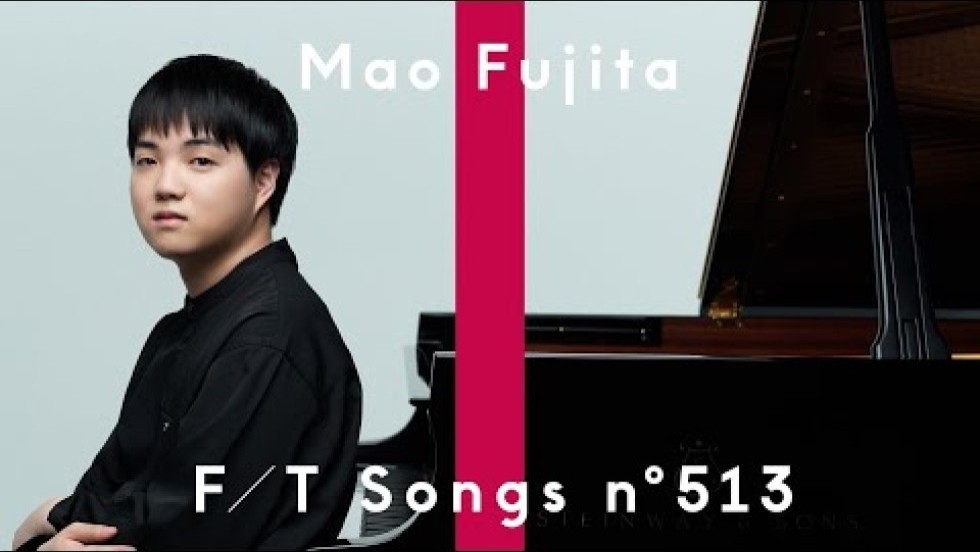
Mao Fujita – Beethoven’s Appassionata Sonata, Movement 3
Pickman Hall Information
This performance is generously supported by
Margaret & Michael Simon.
This performance is made possible in part by support from Vivo Performing Arts' Amy & Joshua Boger Innovation Fund.